


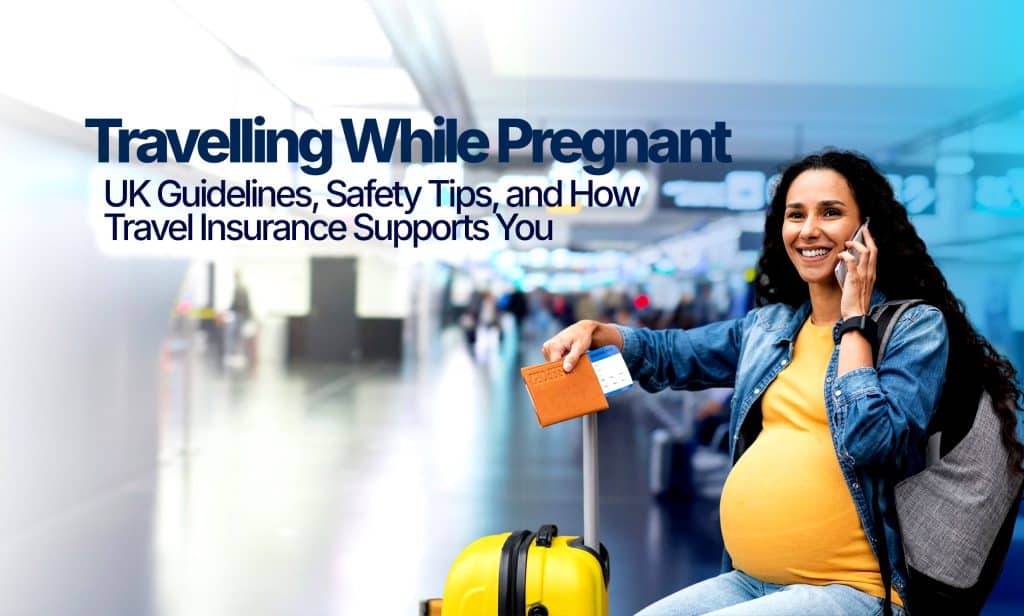
Travelling while pregnant in the UK is generally safe for most women with uncomplicated pregnancies, according to NHS and Royal College of Obstetricians and Gynaecologists (RCOG) guidance.
However, safety depends on how far along you are, your health, airline rules, and whether you have pregnancy travel insurance that covers unexpected complications abroad. This guide explains when it’s safe to travel, what the UK medical guidance says, and how travel insurance supports you if things don’t go to plan.
What is pregnancy travel insurance, and how does it work?

Pregnancy travel insurance is travel insurance that provides limited cover for unexpected pregnancy-related medical emergencies while you are abroad, up to a specified week of pregnancy.
In the UK, pregnancy itself is not considered a medical condition, which means most standard travel insurance policy that covers pregnancy. However, this cover is restricted and focused only on emergencies, not routine maternity care.
Pregnancy travel insurance works by covering unforeseen complications that arise during your trip and require urgent medical attention. It does not cover planned treatment, routine antenatal care, or choosing to give birth abroad.
How it works:
- Cover is limited by gestational age
Most UK travel insurance policies only cover pregnancy-related claims up to a certain week, commonly between 28 and 36 weeks for uncomplicated single pregnancies. Once you pass this limit, pregnancy-related expenses are usually excluded, even if you are allowed to travel by the airline.
- Only unexpected complications are covered
Insurance applies only if a pregnancy complication was unforeseen and medically necessary. Routine pregnancy symptoms or known complications are not usually covered unless specifically accepted by the insurer.
- Medical authorisation is required
If you need treatment abroad, insurers typically require you to contact their emergency assistance team so care can be authorised and managed appropriately, including decisions around hospitalisation or repatriation.
- Airline rules and insurance rules are different
Airlines may allow travel later into pregnancy than insurers provide cover. Always check insurance limits separately, as flying does not mean you are insured.
What does pregnancy travel insurance cover in the UK?

Pregnancy travel insurance in the UK is designed to cover unexpected medical emergencies related to pregnancy while you are abroad, not routine maternity care or planned treatment.
What it usually covers
Pregnancy travel insurance generally provides cover for unforeseen pregnancy-related medical issues that arise during your trip. This typically includes:
- Emergency medical treatment for pregnancy complications
If you experience a sudden, unexpected pregnancy complication while abroad, travel insurance may cover emergency treatment and hospital care. This is limited to complications that could not reasonably have been anticipated and does not include routine symptoms such as mild nausea or general pregnancy discomfort.
- Hospitalisation and inpatient care abroad
Should a pregnancy-related emergency require hospital admission, insurance may cover the cost of inpatient treatment, including tests, medication, and medical supervision. This is particularly important in countries where healthcare is private or where costs are significantly higher than in the UK. - Emergency medical evacuation or repatriation
If doctors determine that you cannot safely continue your trip or return home via standard transport, pregnancy travel insurance may cover medically necessary evacuation or repatriation to the UK. This can include specialist medical flights where required, subject to insurer approval. - Premature labour and emergency birth (within policy limits)
Some UK policies provide limited cover if you go into premature labour while abroad, as long as it occurs before the insurer’s gestational cut-off. However, coverage for the baby may be restricted, and long-term neonatal care is often excluded. This is a key area where policy wording must be checked carefully.
Cancellation or curtailment due to pregnancy complications
If you are advised by a medical professional not to travel or to return home early due to an unexpected pregnancy complication, insurance may cover non-refundable travel costs. This only applies where medical advice is documented and the complication was unforeseen.
What pregnancy travel insurance does not usually cover
It is just as important to understand what pregnancy travel insurance does not cover, as many travellers assume pregnancy is fully included when it is not.
- Routine antenatal care and check-ups
Standard pregnancy care, such as scheduled scans, midwife appointments, or routine monitoring, is not covered. Travel insurance is not a substitute for maternity healthcare.
- Planned or elective treatment abroad
Insurance does not cover planned births overseas or travel undertaken with the intention of receiving maternity care in another country.
- Known or pre-existing pregnancy complications
If you were aware of a pregnancy-related condition before travelling, treatment linked to that condition may be excluded unless explicitly declared and accepted by the insurer.
- Travel beyond the insurer’s pregnancy cut-off point
Even if an airline allows you to fly up to 36 weeks, many insurance policies stop pregnancy cover earlier. Any complications arising after the insurer’s stated limit are unlikely to be covered.
- Travelling against medical advice
If your GP or midwife advises against travel and you proceed anyway, insurers may reject any pregnancy-related claims.
Is it safe to travel while pregnant according to UK medical guidance?
Yes, travelling while pregnant is safe if your pregnancy is uncomplicated and your healthcare provider has not advised against it.
The NHS confirms that travel does not increase the risk of miscarriage, early labour, or harm to your baby in a healthy pregnancy. Also, the RCOG states that occasional travel, including flying, is not harmful for most pregnant women.
However, safety depends on:
- Your gestational age
- Any existing pregnancy complications
- The type and length of travel
- Access to medical care at your destination
Before travelling, UK guidance recommends discussing plans with your midwife or GP, especially if you have a history of pregnancy complications.
When is the best time to travel during pregnancy?
The second trimester (13–27 weeks) is considered the safest and most comfortable time to travel during pregnancy.
During this period:
- Early pregnancy symptoms like nausea often improve
- Energy levels are higher
- The risk of miscarriage and premature labour is lower than in later stages
Travelling in the first trimester (weeks 1–12): Travel is possible, but expect higher levels of fatigue, nausea, and a slightly increased risk of miscarriage. Planning short trips and avoiding strenuous activities is advised.
Travelling in the third trimester (weeks 28–40): Travel is more limited. Airlines may restrict flights after 36 weeks (or earlier for multiples), and medical risks like preterm labour increase. Consider how accessible healthcare is at your destination and allow extra travel time for comfort and emergencies.
Can you travel while pregnant in the UK?
Yes, most pregnant women can travel safely in the UK and abroad, provided there are no medical complications, and travel is approved by a healthcare professional.
UK medical guidance generally supports travel during pregnancy, especially when the pregnancy is uncomplicated. However, this also depends on gestational age, individual health, and the nature of the trip.
Most healthcare professionals recommend:
- Discussing travel plans with your midwife or GP
- Considering how far along the pregnancy is
- Factoring in destination healthcare standards and travel duration
While pregnancy itself does not prevent travelling, it requires caution as the pregnancy progresses.
What health risks should you consider when travelling while pregnant?
Understanding the health risks when traveling pregnant allows you to prepare properly and reduce avoidable complications.
- Increased risk of Deep Vein Thrombosis (DVT)
Pregnancy increases the risk of blood clots, particularly during long periods of immobility such as flights or long car journeys. According to the NHS, pregnant women are around five times more likely to develop a blood clot than non-pregnant women. Long-haul travel increases this risk due to reduced circulation.
To lower your risk while travelling:
- Wear graduated compression stockings
- Stand up and walk around regularly on flights
- Perform seated leg and ankle exercises
- Stay well hydrated and avoid excessive caffeine
- Avoid crossing your legs for long periods
- Fatigue, dehydration, and travel stress
Pregnancy makes you prone to tiredness and dehydration, which can be worsened by travelling. Hormonal changes, disrupted sleep, and physical strain can make long journeys more exhausting than expected. Dehydration may increase the risk of headaches, dizziness, and Braxton Hicks contractions.
- Access to medical care at your destination
One of the biggest risks of travelling while pregnant is being far from familiar maternity care if complications arise. Healthcare standards, costs, and emergency response times vary significantly between countries.
- Risk of infection and destination-specific health concerns
Pregnant travellers are more vulnerable to certain infections, which may be more common in some destinations.
Before travelling, check for:
- Zika virus or malaria risks
- Food and water safety concerns
- Required or recommended vaccinations (some are not suitable during pregnancy
What documents do I need when travelling pregnant?
When travelling pregnant, you should carry medical documentation, emergency contacts, and travel insurance details.
Essential documents include:
- Maternity notes (paper or digital copies)
- Fit-to-fly or medical clearance letter, if required
- Emergency contact details for your midwife or GP
- Pregnancy travel insurance policy documents
Also, have digital backups for these documents in case you lose physical copies.
Do I need pregnancy travel insurance if my pregnancy is uncomplicated?
Yes, pregnancy travel insurance is still recommended even for uncomplicated pregnancies, as emergencies can occur without warning.
Many people assume low-risk pregnancies do not require specialist cover, but pregnancy-related emergencies can still happen unexpectedly.
Pragnancy travel nsurance is important because:
- Emergency treatment abroad can be expensive
- Pregnancy complications are not always predictable
- Some airlines and destinations require proof of insurance
Can I get travel insurance for pregnancy up to 36 weeks?
Yes, some UK insurers offer pregnancy travel insurance up to 36 weeks, but this usually applies only to uncomplicated single pregnancies and emergency situations.
Most standard travel insurance policies stop pregnancy-related cover earlier, often at 28 or 32 weeks, even if airlines allow you to fly later. Where cover does extend to 36 weeks, it is limited to unexpected medical emergencies and does not include routine maternity care or planned births abroad.
It is also important to note that insurance limits and airline rules are not the same. Being permitted to fly up to 36 weeks does not guarantee pregnancy-related cover. Because policy wording and gestational limits vary between insurers, checking the exact cut-off point and exclusions is essential before travelling later in pregnancy.
Is pregnancy considered a pre-existing condition for travel insurance?
No, pregnancy itself is not considered a pre-existing medical condition by UK travel insurers, as it is treated as a natural condition rather than an illness.
This means you do not usually need to declare pregnancy when buying travel insurance, and some level of pregnancy cover is often included automatically within standard policies. However, this does not mean all pregnancy-related issues are covered.
While pregnancy itself is not pre-existing, any known pregnancy complications or related medical conditions may be treated as pre-existing. If you were aware of a complication, risk, or medical issue before travelling, insurers may exclude claims linked to that condition unless it has been declared and accepted in advance.
Travel insurance only covers unexpected pregnancy-related complications that arise during your trip and occur within the insurer’s gestational limits. Routine symptoms, planned care, or issues that were already present before travel are not usually covered.
Therefore, it is important not to assume that pregnancy being not pre-existing means full protection. Understanding how insurers distinguish between pregnancy, complications, and pre-existing medical conditions helps ensure you are genuinely covered while travelling
What should I consider when buying pregnancy travel insurance?
When buying pregnancy travel insurance, you should consider gestational limits, medical cover levels, and policy exclusions.
Key factors to check include:
- Maximum pregnancy cover weeks
- Emergency medical cover limits
- Definitions of pregnancy complications
- Cancellation and curtailment protection
Comparing policies side-by-side makes it easier to identify suitable cover.