

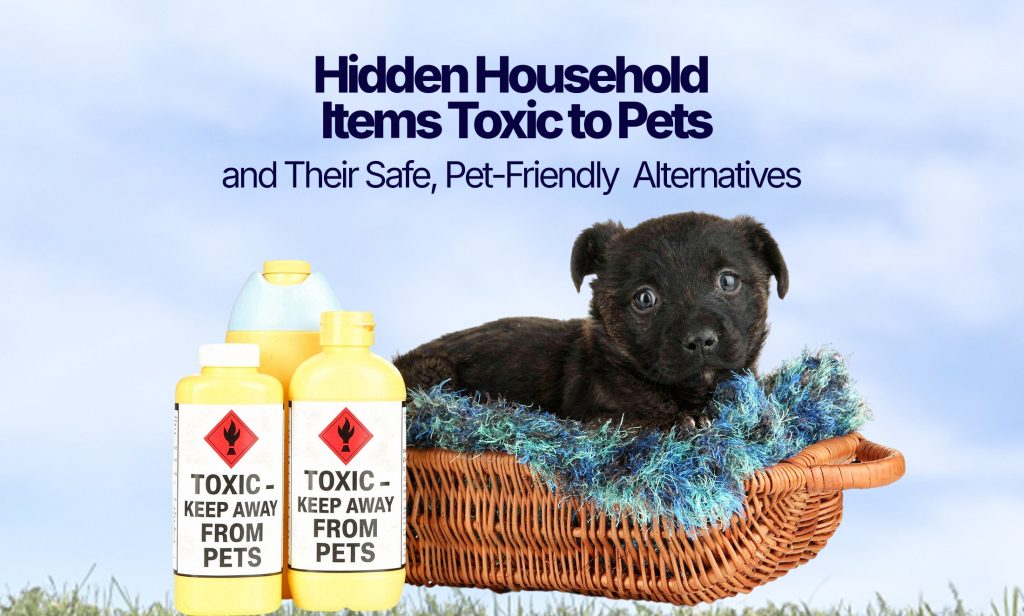
Many everyday household products may seem harmless to people, but some are actually toxic to pets. From cleaning sprays and air fresheners to certain foods, plants, and medications, hidden hazards can quickly put curious cats and dogs at risk. Because pets often explore their surroundings with their noses and mouths, even small amounts of toxic substances can cause serious health problems or lead to an emergency trip to the vet.
Knowing which household items toxic to pets are commonly found in the home is an important step in creating a safer environment. In this guide, we’ll look at some of the most overlooked dangers, explain why they can be harmful, and share safe, pet-friendly alternatives that can help protect your dog or cat while keeping your home clean and comfortable.
Hidden Household Items Toxic to Pets
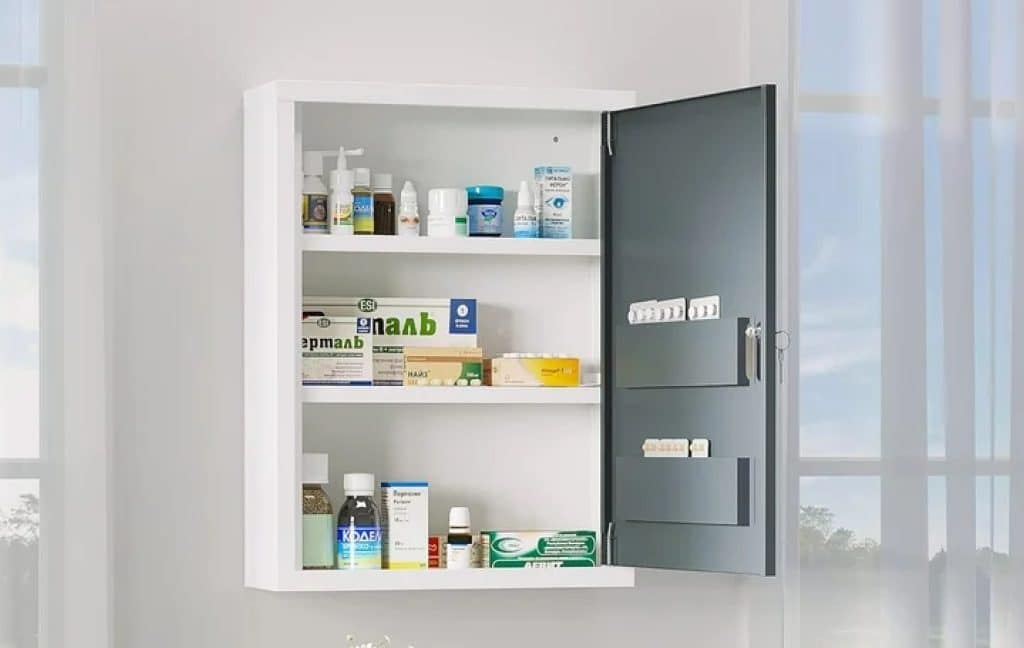
We all love to treat our pets, but some human foods, such as chocolate, can be dangerous to their health. Seemingly harmless snacks and beauty products can also cause long-term, and sometimes fatal, damage to dogs and cats. Here are things that can harm your pet:
- Medications
Those little pills at home might seem harmless to us, but for pets, they can be very dangerous. A dropped ibuprofen, a half-chewed blister pack, or a bottle left uncapped can spell disaster for pets. Even a tiny bit of ibuprofen or acetaminophen can cause serious health problems like kidney failure or liver damage, especially in cats.
According to reports, ibuprofen is responsible for nearly 10% of all medication-related pet poisonings. It is so easy for pets to get into pills left on counters or dropped on the floor, so it is essential to keep medications locked away.
What to do:
- Store medicines in secure, high cabinets.
- Never give your pet any medication without your vet’s advice.
- Be extra cautious with pills dropped on the floor.
- Household Cleaners
We all want a clean home, but those strong-smelling cleaners can be harmful to our pets. Chemicals like bleach and ammonia might keep the house clean and sparkling, but they can cause vomiting, breathing problems, or worse if your pet sniffs or licks a freshly cleaned floor.
Did you know that 1 in 5 pet poisonings involve cleaning products, but you don’t have to leave your home dirty and unkempt. Simple things like vinegar and water, baking soda, or gentle castile soap can serve as home cleaning agents, and they are much safer for your pets.
3. Pest Control
Nobody likes unwanted pests, but those rat poisons and bug sprays can be deadly for pets. Rodenticides, for example, cause internal bleeding and send thousands of pets to the emergency vet every year.
If you need to deal with pests, try safer options like:
- Humane traps
- Natural repellents like peppermint oil
- Professional pet-friendly pest control services
Always read labels carefully and store pest control items well out of curious paws and noses.
Foods That Can Harm Your Pets

Sharing food with our pets feels natural, but some human foods can be harmful to dogs and cats. Foods like chocolate, grapes, onions, and even some nuts can cause serious illness.
Here’s a quick table to help you remember what to avoid:
Food | Why is it Dangerous? | What to Watch For |
Chocolate | Contains theobromine, which is toxic to pets | Vomiting, seizures, and heart problems |
Grapes & Raisins | Can cause Kidney Failure | Lethargy, vomiting, and kidney issues |
Onions & Garlic | Can cause anaemia | Weakness, pale gums, tiredness |
Macadamia Nuts | Affects the Nervous System | Tremors, weakness, vomiting |
Xylitol (sweetener) | Causes low blood sugar & liver damage | Seizures, lethargy, vomiting |
Chocolate poisoning alone accounts for approximately 15% of food-related pet health emergencies.
Instead of sharing your snacks, try pet-safe treats made just for them. It will keep them healthy, and they will love you more.
Other Household Items to Watch Out For
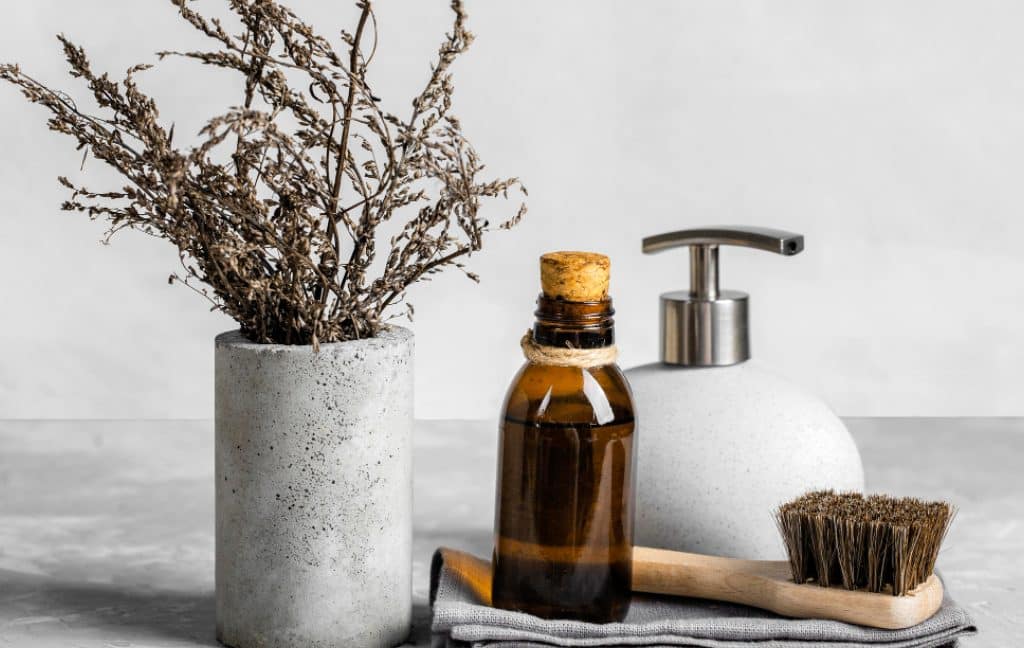
- Essential Oils and Beauty Products
Essential oils are everywhere these days, from diffusers and candles to shampoos and others, but some of these sweet smells, like tea tree or eucalyptus, can hurt your pets. Cats are very sensitive and fragile, and even a little exposure can cause serious problems.
If you love aromatherapy
- Make sure you keep diffusers out of reach
- Use pet-safe grooming products.
- Always consult your vet before using any oils around your pets
2. Plants and Garden Products:
Plants brighten up and make our homes and gardens more beautiful, but not all are pet-friendly. Popular plant varieties like lilies, azaleas, and daffodils can be toxic to pets. Garden chemicals like fertilizers, weed killers, and slug pellets can also cause your pet harm.
Safe swaps:
- Pet-friendly plants like spider plants, Boston ferns, or bamboo palms
- Organic fertilisers and natural pest repellents
- Keep pets off treated lawns until safe
3. Other Household Items to Watch Out For
There are a few other sneaky items that can cause problems:
- Batteries (they contain acids and metals)
- Salt dough or play dough (high salt content)
- Fabric softener sheets (can upset tummies)
- Paints and solvents (toxic chemicals)
Make sure these are stored safely and out of your pet’s reach. A locked cabinet with batteries, paints, and craft supplies, with a curious puppy nearby.
Seasonal & Holiday Hazards
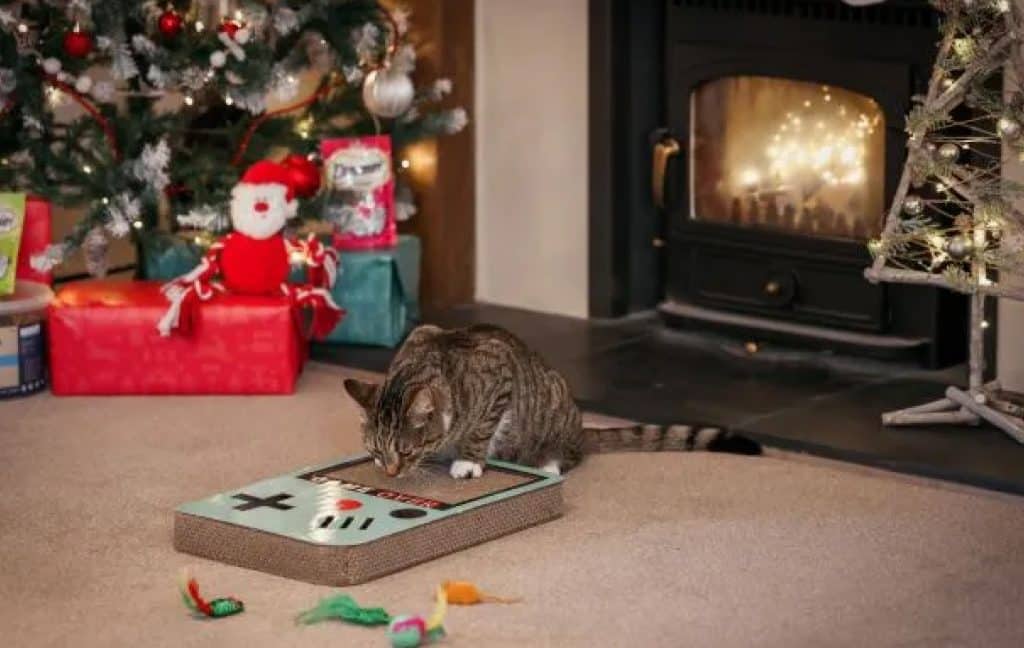
Holidays and seasonal changes bring joy and celebration, but they also come with new risks for our pets. From Christmas to spring cleaning, it’s important to keep safety top of mind as our routines and surroundings shift.
Common seasonal risks include:
- Festive decorations
- Holiday foods
- Scented items
How to keep pets safe during the holidays:
- Keep festive food well out of reach
- Skip tinsel or anything small and chewable
- Choose decorations made of pet-safe materials
- Store new cleaning or scent products safely, especially after gift hauls
- Rinse paws after winter walks to remove road salt or de-icer
Celebrations are better when everyone is safe and happy, including the ones with paws and whiskers. A little planning goes a long way in keeping their tails wagging all season long.
Pet-Proofing Your Home: One Room at a Time
Our homes are filled with love, comfort, and the occasional pet zoomie, but they can also hide a few dangers if we’re not paying attention. Pet-proofing might sound like a big task, but it’s just about taking small, thoughtful steps in each space your pet explores.
Let’s take a walk through the house together, room by room, and see how we can make each one a little safer for our furry companions.
In the Kitchen
The kitchen is where delicious smells come from, and naturally, that’s where our pets love to hang out. But it’s also where most accidents happen.
A few easy wins:
- Keep countertops clear, especially of chocolate, grapes, or anything toxic.
- Store food in secure containers and cupboards.
- Use bins with tight-fitting lids or place them inside cabinets.
- Wipe up spills like cooking oil or dropped crumbs quickly.
In the Living Room
This is the heart of the home, where cuddles happen, toys get tossed around, and your pet probably claims their favourite couch. A few sneaky hazards can also crop up.
Try this:
- Hide away remote controls, batteries, and tiny chewable things like buttons or beads.
- Use cord protectors for lamps and gadgets to avoid nibbles.
- Keep plants like lilies or poinsettias off the floor and out of reach.
- If you love diffusers or candles, make sure they’re pet-safe and placed up high.
In the Bedroom
Your room is your calm retreat and your pet’s favourite spot for a nap. It’s also where we tend to leave things lying around.
Keep it calm and safe by:
- Putting away jewellery, pills, or small items left on nightstands.
- Avoid lit candles or incense within sniffing distance.
- Tucking wires and chargers out of reach or behind furniture.
Closing closets or drawers that curious paws might try to sneak into.
Easy Everyday Tips That can Help keep your Pets Safe
- Store meds, chemicals, and toxic foods where pets can’t reach them.
- Teach children and guests in your home about what is harmful to pets.
- Keep an eye on your pets, especially during holidays or when guests visit.
- Use natural, pet-safe products whenever possible.
- Keep your vet’s number and emergency info visible
- Monitor pets during holidays and home changes.
- Consider pet insurance for peace of mind during emergencies.
Conclusion
It is easy to forget that some everyday items can be harmful to our pets, but a little awareness goes a long way. By swapping out toxic products for safer alternatives, locking up dangerous items, and sharing what you learn with your family, you are making your home a loving, safe place for your furry friends.
Because at the end of the day, nothing beats the peace of mind that comes from knowing your pets are safe, happy, and healthy.